Thursday, March 30, 2006

Classical Architecture Quiz


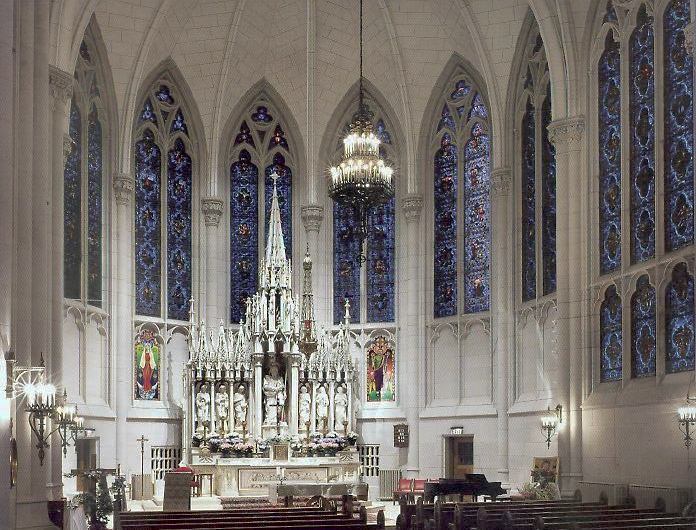
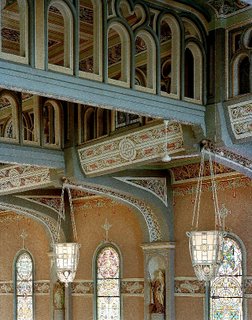
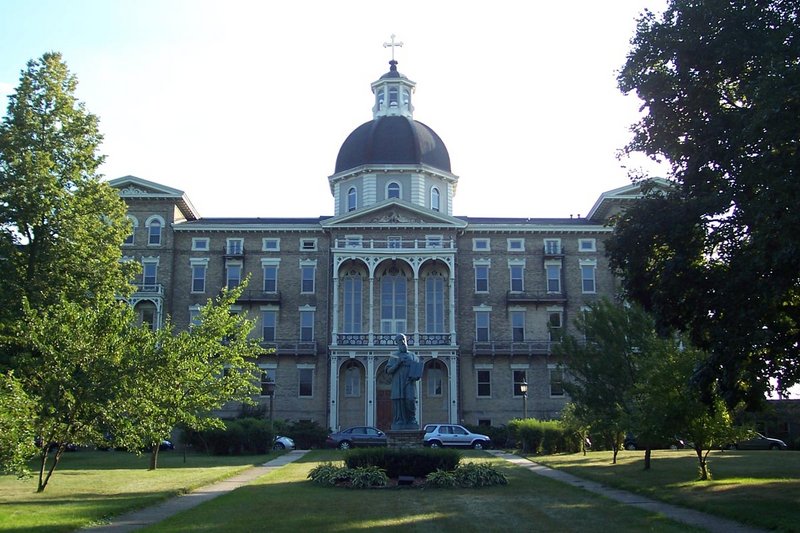
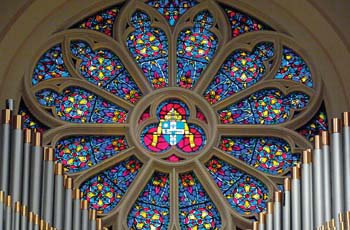
Came across this photo looking for information on the Chicago El. For 2 points and digital photo of your favorite Chicago Church, indentify this photo.

Clues
1) If it sort of looks like a Church, well... Many Cathedrals were used for the same function as this facility.

2) The building is closely associated with, but not located in Chicago.

3) The buiding is named after a major builder in Chicago and London.

Get your 2 points!

Tuesday, March 28, 2006

Concerts at St. James Chapel


Announcing 2pm Second Saturday concerts for St. James Chapel at Quigley Prepartory Seminary on Rush at Pearson in Chicago.

April 8th A Trio
Michael Gurt-Piano
J. Patrick Rafferty-Violin
Paul York-Cello

The total experience with classical music within the jewel of a Chapel is sublime.

Please attend and enjoy the show!

Thursday, March 23, 2006

Traditional Building Trade Show in Chicago


The Traditional Building Trade Show will be held in Chicago on April 5-8 at Navy Pier's Festival Hall A. What better way to shake out the Winter and welcome the Spring than a festival full of Stained Glass, Limestone, and Wood Carving?

Tickets are available here. They should be free.


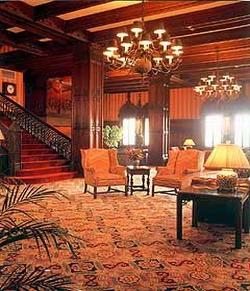
Seminars etc will cost money, but the show floor is generally FOC. If you have the nerve, the organizers recommend staying at the Congress Hotel. Duck your head into the Gold Room, pictured here, one of the most beautiful rooms in the world, and very underutilized. Shall the Society of St. Barbara hold its annual dinner here?

Thursday, March 16, 2006

More Catholic Scientists (or The Missing Barber of Berkely)


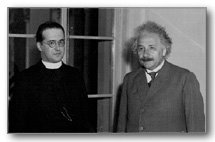
Stumbled on this today from Ignatius Press; Georges Lemaitre (1894-1966), a Belgian mathematician and Catholic Priest was a pioneer in developing the Big Bang theory of the creation of the universe.

During a series of lectures at Cal-Berkely in 1933, Fr. Lemaitre introduced the world to his revolutionary theory. After the Priest detailed his Big Bang theory, Einstein stood up applauded, and said, “This is the most beautiful and satisfactory explanation of creation to which I have ever listened.”

I dedicate a photo of the Belgian (Flemish/French) Roman Catholic Church in Chicago, St. John Berchams to the innovation and deciation of Fr. Lemaitre.

Saturday, March 11, 2006

Help Identify this Liturgical Element


Within St. John of God on Sherman Park there is this unique fixture above the Mary Altar, with a Polish Inscription. Can anyone identify the piece? The artist? Translate the inscription to English? This is a very splendid piece of adornment, hanging in this shuttered church. Anyone have a current need for it? I will contact the Archdiocese if you need it.

Click on photo for more detail.

Thursday, March 09, 2006

Where in the world is SJOG?


A Grand Basilica on a late winter's day in Normandy? Relaxing lagoon, charming fieldhouse, and the majesty of the twin towers of a Baroque masterpiece on the north edge of a picturesque park.

Welcome to the South Side of Chicago! This is St. John of God in Sherman Park. I spent the day catalogging the art and architectural furnishings of SJOG, and will post these soon. (Click on the photo for larger image)

The church is currently vacant, a bit damp, and an architectural masterpiece by HJ Schlacks.

Wednesday, March 08, 2006

The End (Cap) Times are Here


Who would have thunk it? (Is that from Dizzy Dean?)

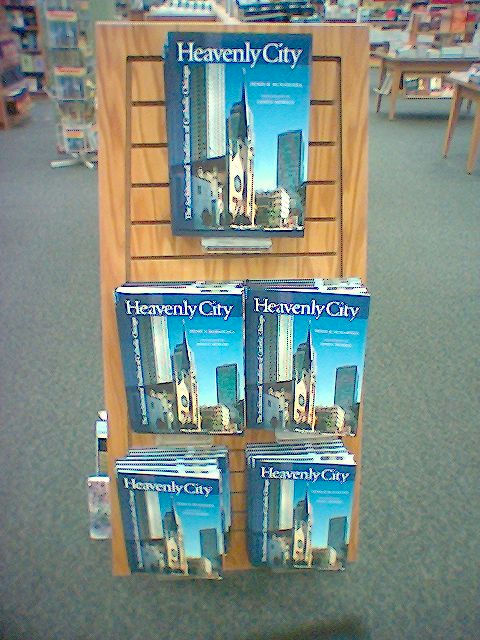
So, if you had a maniacal scheme to take a series of photographs and write an architectural history of the Archdiocese of Chicago, would you think it would come out on an endcap at the Borders Bookstore down the street from your house. Pictured here is a terrific stack of soon to be depleted Heavenly City books, at the Borders Wilmette store. Someone must like these things, as they are turning up everywhere.

Monday, March 06, 2006

Give me three good Episcopalians, and keep the doors unlocked


St. Thomas
St. Mary the Virgin
Grace Church

They are all three beautiful. More importantly, they were all unlocked when I went to see them this past weekend.

Fr. Joseph Fessio, S.J at the CAA


The renowned Catholic leader Fr. Fessio, SJ will be the monthly luncheon speaker at Catholic Citizens this Friday (at the architectural gem) Chicago Athletic Association. The food is good, the dining companions generally combative, and the speakers in this series have been terrific. The Catholic Citizens are led by the fearless Tom Roeser.

If you get the chance, take a look at the Venetian stonework on the windows facing the Lake Michigan seawall. Sure to be a winner.

Saturday, March 04, 2006

Blue Sky, Golden Stars in Peoria


Some good friends of mine and I took a trip last week down to Peoria under the sad circumstance of attending a funeral at a local parish. On the way back, after praying for the deceased and spending a few quiet moments with the family, we took the opportunity to visit the cathedral. We'd seen it on the way in, its tall American Gothic spires rising against the forested slopes of the river valley. It was one of those warm-chill days that crop up occasionally in the borderlands of an Illinois spring, the honey-gold stone of the church vivid against the bright, flat blue of the sky. One of our number had been there before and found it locked that time, and after we'd parked the car, we'd found it still was.

So we decided to go ask the bishop to let us in.

This isn't too far-fetched. I won't go and say that we're tight with the Most Rev. Daniel Jenky, but the man does have deep connections to Notre Dame. During his stint as rector of ND's Basilica of the Sacred Heart, the gilt went back on the floriated gothic column capitals, the ambo got cranked up a couple of few, and the Stations of the Cross ended back up on the walls after a long and dusty search through a dozen campus attics and store-rooms.

Buzzing at the cathedral rectory next door, we found out that his Excellency was out but they'd certainly let us have a look round the place.

Even a cursory glance at the outside is pretty memorable. It's one of the more monumental examples of 19th century American Gothic, in particular the vernacular, charmingly quirky take on it that one finds sprinkled through the rolling hills of the Midwest. Twin high-steepled octagonal spires loom over the low-lying town all around it, twin gilt crosses high in the sky overhead. The stonework is rough, not quite irregular, but rustic and rugged enough to suit the town's bucolic surroundings, and reminiscent of Pugin's dictum that small stone blocks made for more interesting walls than plain ashlar work. The doors are an episcopal purple--slightly jarring at first, but not without interest--with burly verdigrissed hinges that look as old as the hills. In terms of massing and decoration, it tends towards simplicity of line and shape, as befits its place and period, but keeps the monumentality necessary even in a fairly small cathedral.

Inside, his Excellency has done a fine job bringing the place back to life. The Cathedral has gone through numerous face-lifts in the past century. At one point, the paint job had tended towards the darkness and mystery recommended by Cram and his compatriots, while more recently, much of the gilding and woodwork was lost under a bland coat of whitewash. Over the course of a couple of interventions, the chancel stalls were taken out, the altar-rail dismantled and turned into fodder for a smallish ambo, and an incongruous '80s-style tabernacle installed in one of the side-altars. Jenky put a stop to all that. One of his first moves upon being elevated to the see of Peoria was to move Christ back to where He'd always been before, at the center of the reredos.

A lot had been lost, and re-shuffled in the meantime, and the Bishop had to make the best with what he'd been given. He has. The elegant Gothic reredos, all gilt and creamy-white apparently had been partially patched together from an astonishingly ornate canopy that had once stood over the episcopal cathedra on one side of the chancel, for instance. At the center of the reredos is a copy of Velazquez's famous Crucifixion, which at present does not quite fit within the framework of the altarpiece but nonetheless serves as one of the few remaining links with the original cathedral.

A few other additions came in the form of re-using old side-altars as shrines that flank the chancel and are marked off by the partial reinstallment of the old altar rail. One now serves as a baptistery, the other as a shrine to Our Lady of Guadalupe. The church is lofty and luminous, white walls setting off a remarkable acreage of indigo stained glass peopled with saints and martyrs, missionaries and sacred heraldry. The place has a pleasant airiness that still retains some of its mystery. In terms of plan, it is almost a hallenkirche, a familiar Teutonic design with aisles almost as high as the central nave. Granite pillars of astonishing height and slimness soar up to a elaborately-ribbed vault, now painted blue and white, and perhaps, we were told, in the near future that blue sky may be emblazoned with medieval stars as is the bishop's wish.

Most impressive, though, is the renovation of a small space off the chancel, a former winter chapel, as the church's relic chapel. It is dark and holy, with vivid stained glass of the martyrs John Fisher in full pontificals, Thomas More and Oliver Plunket in purple and scarlet, looking almost dashing in a Charles II goatee and mustache. Jenky was perhaps inspired by the old relic chapel at Notre Dame--the current form of which was probably his idea to begin with--and has brought it to his new home here. A relic of the true cross holds pride of place behind the altar, with glass-fronted cabinets on either hand. We pressed our fingers to the glass and counted off each one, excited and delighted as we recognized the names of old dear saintly friends--Aquinas, Albertus, Matthew, Maria Goretti and more. Overhead, the stars already shine in the blue-vaulted sky, the work of Murals by Jericho, a company which has also tricked out Peoria's parish of St. Mark in a remarkable set of reproductions of the work of Fra Angelico.

The relic chapel also features a surprisingly baroque chair belonging to canonization candidate Fulton Sheen, whose cause the Bishop is spearheading. Some day, come his beatification, his body may rest here, or perhaps at the first parish he served at, just a few blocks away. It was sold to a Protestant demonination some years back, but the interior, altar and all, remain untouched. While perhaps it is wishful thinking at present, one can't help wonder what a fine national shrine that church might make should it ever be re-patriated.

There is much else to recommend this little-known vernacular gem. A small shrine to St. Therese of Liseux features gold-dipped roses given by a priest as ex-votos for every vocation he has prayed for that has come to fruition (and in recent years, he's donated quite a few), while the cathedral has two organs, a small chamber piece down on the floor and one high up in the uppermost of the church's two lofts. Occasionally, they play the two of them at once, ad alternim in the fashion of the great churches of the Renaissance.

While we miss Bishop Jenky down at ND, seeing what he's done with his time here, we can't help thinking he's done a whole lot with only a little time. Given rumors we heard mention of future frescoing--not just gold stars--we hope that his embellishment of the cathedral church of his diocese will continue well into the future, and set a standard of artistic and spiritual excellence for all those who will sit in the cathedra after his tenure.

Saturday, February 25, 2006

Restoration 2-Welcome to Chicago, Illinois


Cardinal Henry Stuart-Duke of York (a job now held by Prince Andrew), died in 1807 , some 15 years after the failed Irish Revolution of 1792 and 25 years after the successful American Revolution (no word on the Henry Stuarts feelings on the rebellions). Via the failed Irish Revolutions, punitive laws prohibitting Catholic Landowning in Ireland, millions of Irish take to the new countries of the United States and Australia (among many others), some ending up on Adams and Halsted in Chicago, at the then new Old St. Patricks in 1846.

As Ireland's own Catholic Churches had been disassembled or destroyed by the occupying British Armies, architects, such as Augustus Bauer and Asher Carter of St. Patricks, drew on the Roman Architectural tradition to develop Chicago's Irish parishes. Holy Family on Roosevelt and May was designed in the same period with even greater grandeur and European heritage. Central and Western Illinois were (and still are) populated with numerous St. Patrick's as champion of the Irish immigrants seeking wages, land ownership, and additional religious freedoms.

The buildings themselves had very little Irish heritage to draw upon, leaving the church designs to flow from the general Roman Catholic church building tradition. The Restoration of the Church began in earnest as an inspired vision to connect to the broad sweep of Catholicism.

How the Restoration Started (Part 1)


Pictured above is Henry IX, Cardinal Duke of York, great-grandson of Charles I, and the one-time owner of the English Crown Jewels. While Charles II, Henry's great-uncle, was restored to the crown of England, after the Cromewellian revolution, Henry was never crowned King of England. Englands loss though, was a great gain for the Roman Catholic Church, with Henry IX leaving a great legacy of building in Italy highighting the finest in Art and Architecture, brining generations of English Speaking Catholics into communion with Rome.

Thursday, February 23, 2006

Whiting Indiana, Whiting Indiana, Whiting Indiana


Pardon the Music Man, but driving back from Notre Dame this morning, the industrial landscape is widely regarded as bleak and doomed, thus all the better for the beacon of Heaven's incarnation on Earth to show as brilliantly as St. John the Baptist in Whiting Indiana. Big, brawny, Polish, and a Herman Gaul masterpiece, I stopped for a tour and visit. Sparkling interior, typical of the best Polish Churches, and as well built as her sisters in Chicago, St. John the Baptist, and the beautiful Parish School next door, find a dramatic context in Northwest Indiana.

Tuesday, February 21, 2006

If USML played at Notre Dame it might go something like this


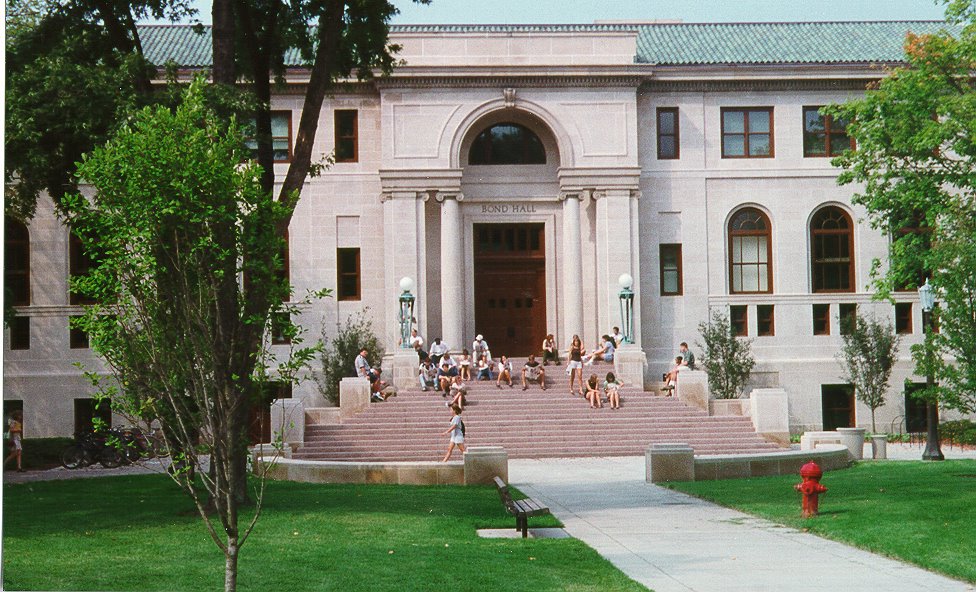
Denis McNamara, noted author and a member of the Society of St. Barbara will be lecturing on his book, Heavenly City: The Architectural Tradition of Catholic Chicago on Wednesday February 22 at 6:30 PM, Room 114, Bond Hall. All are welcome.

Fittingly enough, while I was at the Chicago Architecture Foundation Bookstore today, the sales manager noted that customers are requesting autographed copies of Heavenly City, and are sorting through the store's inventory to find the hidden gem (as McNamara tends to sign books upon his visits to retail stores).

McNamara assures the Society, he will be available for autographs after the Bond Hall lecture.

Saturday, February 18, 2006

Festival Discovery


While at the Catholic Festival of Faith in Rosemont, I had a chance conversation with Sister M. John Vianney, SSCM, who is researching the immigrant foundation of Chicago's Churches, a subject integral to the Bricks and Mortar Foundation. Sr. M John explained that far from the illiterate rubes often potrayed in mainstream history, our immigrant forebearers had a sophisticated knowledge of Church building and finance, starting multinational banks and insurance companies with the implicit backing of the Parish.

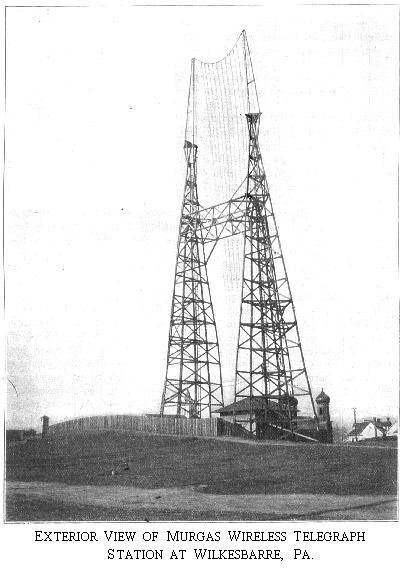
One of the least publicized pioneers, Fr. Josef Murga, a Slovakian effectively developed a radio transmit and receive system years before Marconi and Tesla, known as the Murgas System of Wireless Telegraphy. Fr. Murga sent his prayer "Thank God for His blessings" from Wilkes-Barre to Scranton Pennsylvania in 1905, making him the earliest radio operator to send and receive a long distance signal.

Sr. Vianney has a wealth of information regarding our Immigrant pioneers. I look forward to her upcoming publications.

Wednesday, February 15, 2006

Bring More Rosaries: Pre-Lent Catholic Festival in Chicago


OK, it might not be as lively as Mardi Gras, but there are many reasons to celebrate the Catholic Festival of Faith at the Donald E. Stephens Convention Center in Rosemont, IL (near Chicago's O'Hare Airport) February 16-18., 2006

Let's enjoy

1) One of the top Homilists in the Archdiocese, Fr. Robert Barron spreads the Good Word with the beginning of his Evangelization Mission at the fest.

2) Dinner and more evangelizing with Cardinal Francis George

3) The glue which holds the Church together: Multiple lectures on Parish Finance and Fundraising with the Archdiosocean Financial team.

and of course, do not miss Denis McNamara signing copies of "Heavenly City" at the Liturgy Training Press booth.

Action, Adventure, and Evangelization. Welcome to Rosemont!

Wednesday, February 08, 2006

The Baron of Lake Michigan or What to do in Milwaukee

OK,

Denis McNamara has convinced me to make a pilgrimage to Milwaukee to see the Vatican Exhibit. Milwaukee, nicknamed the Baron of Lake Michigan celebrates a great German Heritage with fine architecture, restaurants and a cheerful
community. When travelling to Milwaukee how about:


1) Stop at the Basilica of St. Josaphat. Constructed from the stone remains of the Old Chicago Post Office, this is one of the most grand churches ever assembled. Sparkling, majestic, devotional, this is the temple of Milwaukee Catholicism. The Franciscans may take a bow.


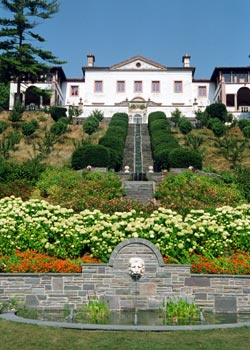
2) Brunch at Cafe Sopra Mare at the Villa Terrace Decorative Arts Museum, 2220 N. Terrace Ave. This David Adler designed Renaissance Villa on Lake Michigan commands attention to design and presentation of the urban community. If you are there in the evening, stay for a lecture on Garden Tips


3) Have a glass of what made Milwaukee famous at the Pabst Mansion, the former home of the Archbishop of Milwaukee and (the founder of PBR). The gift shop in the Mansion is the extinct chapel of the Archdiocese.

4) Stop in St. Francis, the first city south of Milwaukee, to see the Seminary and an entire town names for a great Saint.

I will enjoy my visit to the Baron of the Midwest and I hope you enjoy your's as well.

Tuesday, February 07, 2006

Saint Peter and the Vatican

The Milwaukee Public Museum's new exhibit on Saint Peter and the Vatican opened recently with some fanfare. It's an exhibit tracing the role of the papacy in the Church, starting with Saint Peter and continuing through to Benedict XVI. The advertising to promote the exhibit uses a lot of phrases like "once in a lifetime" opportunity which seems a bit exaggerated. It is definitely *not* a tour of the Vatican's greatest treasures, but instead is more like a historical society exhibit. Don't expect to find Michelangelo's Pieta anywhere, but you will find a good deal about Peter himself and his tomb under Saint Peter's Basilica, lots of papal memorabilia like silk slippers, a chalice with 1000 diamonds on it, numerous papal tiaras, letters to popes from mission lands, and the machine that makes the white smoke during a conclave. In general, the level of understanding of Catholic thology in the exhibit is higher than one ususally sees at these things, though the film in the first room describes the papacy as a marker of the passage of history "from Peter to Constantine to Napoleon." A child behind me asked his mother who the second pope was and she answered"Constantine." Let's hope the film hasn't convinced people of the existence of Pope Napoleon I. The film also claimed that St. Peter's Basilica "inspires feeling of spirituality," which is different from the presence of God and the life of grace, but it will do. The exhibit ends with a film of Pope John Paul II in his last days, and visitors are invited to touch a bronze mold made of John Paul's clearly arthritic hand before they leave.
All in all, the exhibit is worth a visit. The $18.50 ticket price is pretty reasonable, and anyone interested in the papacy will enjoy it immensely. It's also a good way for families to learn and discuss the origins and meaning of the Faith.

Saturday, February 04, 2006

The Rose of Peoria


The Peoria Journal Star has a fine slide show on the Cathedral in the Catholic Diocese of Peoria Illinois. The CDOP has renewed its devotion to Mary officially naming the Cathedral of St. Mary of the Immaculate Conception. CDOP is led by Bishop Daniel Jenky, a Notre Dame Trustee, and advocate of church restoration and preservation. I have had the pleasure of knowing Vicar General Msgr Paul Schowalter of Peoria for over 30 years now, from his service in Wapella, IL at St. Patricks and at Central Catholic High School in Bloomington, IL.

Peoria is also know as the home Diocese of Archbishop Fulton Sheen, who is a candidate for sainthood. His Chair is shown here.

Thursday, February 02, 2006

The Cathedral of the Blessed Sacrament, Sacramento


While my entire personal exposure to the city of Sacramento is restricted to a quick glance out the side-window of my family's car back during the nebulous days of childhood vacations, I am nonetheless most impressed by the incredible $34 million renovation completed recently in November of 2005 at the cathedral downtown. The restorers left Sacramento Cathedral far better than they found it, a true sign of hope for the future of ecclesiastical architecture.

Dedicated in 1889, the Cathedral of the Blessed Sacrament is a fascinating monument to the flamboyant eclecticism of Gilded Age America, here applied to a more worthy cause than the townhouses of railroad tycoons or the summer estates of the idle rich. I'm unsure what happened between then and now, but more recent photographs of the pre-restoration church show an interior of faded glory, with jaundiced salmon-pink walls, an unruly hodgepodge of architectural styles passing beyond even the church's deliberate eclecticism, and an unremarkable '60s-style altar island.

With the assistance of painters from EverGreene Studios in New York, Beyer Blinder Belle Architects and Harbison, Mahoney and Higgins Construction liberally coated the interior with 250 splendid new works of art in perfect harmony with the building's classical roots. The amount of original traditional artwork created for the project is, to my knowledge, unrivalled by any other ecclesial projects currently under construction, and includes everything from beautiful stencil-work to full-size canvases of apostles, saints and martyrs. Most ambitiously, the church restoration also included the replacement of the low false dome, dating from the 1930s, with a larger interior shell with a twenty-four foot oculus and an elaborate iconographic program.

The altar was replaced with a large marble structure containing relics of one of the martyrs of the Mexican Cristero rebellion. The sanctuary of the church and the accompanying Eucharistic chapel is worth noting, as it is of somewhat novel--though not necessarily unsuccessful--design. The altar stands beneath the crossing in the untraditional "thrust sanctuary" form sometimes favored by certain modern liturgists. However, the large hanging crown or tester canopy with thirteen-foot-high crucifix standing over the crossing serves to give the freestanding altar the prominance it properly deserves. More intriguing is the placement of a screened Eucharistic chapel in the apse beyond the altar. The open arches allow some measure of privacy while allowing the six-ton, twenty-foot-high tabernacle canopy to serve as a visual focus for those seated in the main body of the church, and also to relate to the altar and sanctuary with a certain degree of appropriate hierarchy.

While not an appropriate arrangement for a parish church--despite some contemporary authors' suggestions to the contrary--a separate Eucharistic chapel may be considered more suitable for cathedrals. This is based on a number of rubrics from the old Tridentine rite that suppose this arrangement, or at least require that the Sacrament be reserved away from the high altar during pontifical fuctions. One must note, however, that the great St. Charles Borromeo placed his tabernacle above the high altar at Milan Cathedral, so these regulations are hardly universal.

In America, where most cathedrals were essentially designed to serve as oversized parish churches, without the accompanying ceremonial of the cathedral chapters of canons so common in Europe, this custom never caught on, and due to the current controversies over tabernacle placement in parish church, prudence suggests that the implementation of this fairly well-established tradition might be reserved for a more felicitous time when it might not further endanger the belief in the Real Presence.

This rather novel arrangement, however, permits some of the separation considered important by some older authorities in a cathedral church without denying the view of the home of the Sacrament to the larger body of the faithful. Only two problems present themselves--one, the odd antiphonal seating in the chapel, which might make Eucharistic adoration difficult, and two, the potential distraction of laity moving about behind the altar in a space on the same level as it, and, to some degree, serving as an extension of the sanctuary. (It would make a fine space for a chapter of canons to sit, though!)

I am unsure whether I would recommend the adoption of this practice in other cathedrals, though I am glad the experiment was tried, as it is at least a gesture towards tradition. It is more preferrable, I believe, to the arrangement at the otherwise quite unobtrusive renovation at Salt Lake City which places the tabernacle on axis with the altar but obscures it with a virtually opaque screen.

However, certainly we must extend our congratulations to the diocese for this wondrous re-fitting of an old, if somewhat tarnished, gem. May it be a light to other dioceses and their faithful at the beginning of this century, in the hopes of helping to further another renaissance of ecclesial design.

For more information and photographs of the project, see the PDF slideshow, and the Cathedral website.